Best WordPress Hosting (2026)
Choosing the right WordPress hosting is one of the most important decisions you can make for your website.
It directly affects your speed, SEO visibility, conversion rates, backend experience, and your ability to scale when traffic starts growing.
Most “best WordPress hosting” lists are influenced by affiliate payouts and recycled recommendations, not real performance data.
That’s why you constantly see the same companies mentioned even when their real-world resource limits, support quality, or long-term value tell a different story.
This guide focuses on what actually matters:
performance, scalability, Core Web Vitals support, WooCommerce readiness, and whether a host is genuinely built to support growing WordPress sites.
What Actually Makes a Great WordPress Host?
A great WordPress host is not just the one with the nicest dashboard or the biggest discount on the homepage.
It’s the one that gives your site enough room to perform well under real conditions, while also making it easier to maintain, secure, and grow over time.
- CPU and RAM allocation, not just vague “visit” metrics
- Modern hardware such as NVMe storage and current server infrastructure
- Scalability without aggressive throttling or forced overages
- Smart caching and CDN support
- Useful support when something breaks or performance drops
- A setup that works for WooCommerce, content-heavy sites, and technical SEO
Hosting plays a direct role in performance because server response time affects Core Web Vitals, especially Largest Contentful Paint. Learn how performance impacts SEO and speed →
A slow host can quietly sabotage a fast theme, a well-built site, and even strong SEO work.
Why Most “Best WordPress Hosting” Lists Are Misleading
Most hosting comparisons are driven by affiliate commissions, not real-world performance.
That’s why you’ll see the same platforms recommended everywhere, even when they rely on strict resource limits, aggressive upsells, or marketing-heavy positioning.
Popularity does not equal performance.
The best hosting for your site depends on how well it handles traffic, scaling, and real-world usage, not how often it’s mentioned in blog posts.
Quick Picks:
Best Overall • Best Value VPS • Best for Raw Performance • Best Mid-Tier Option • Best for Developers
Best WordPress Hosting Providers
1. Yogi’s VPS

Yogi’s VPS is built for serious WordPress site owners who care about performance, Core Web Vitals, stability, and ongoing technical support.
Unlike traditional hosting plans that mostly give you server space and a support inbox, this is positioned as a managed performance environment. That means the goal is not just to keep the site online, but to help it run better as the business grows.
Best for: high traffic websites, WooCommerce stores, SEO-focused businesses, publishers, agencies, and brands that need performance plus real technical assistance.
Where Yogi’s VPS stands apart is in the combination of hosting, maintenance, optimization support, and development help. A lot of “managed hosting” stops at infrastructure. This offer is designed to go further into what site owners actually need once a WordPress site becomes business-critical.
- Core Web Vitals support and performance tuning
- Built with scaling in mind
- Help with maintenance and technical troubleshooting
- Better fit for users who need more than basic shared hosting
- Strong option for growth-focused WordPress businesses
Why I recommend it:
If you want hosting that supports performance, maintenance, and growth together, this is the strongest overall option on the list.
2. ScalaHosting

ScalaHosting is one of the better options for users who want VPS-style performance without jumping straight into a more premium managed environment.
It has earned a strong reputation for value because it gives users more control and more room to scale than traditional shared hosting, while still being more approachable than fully custom infrastructure.
Best for: users who want a strong VPS option with better value and more flexibility than many heavily marketed alternatives.
- Strong value in the VPS category
- Scalable resources
- Good fit for performance-conscious users on a tighter budget
- Often a better long-term path than bloated shared hosting plans
Why I recommend it:
ScalaHosting makes sense for site owners who have outgrown entry-level hosting and want more power without overspending.
3. MechanicWeb

MechanicWeb is one of the more underrated names in this space. It does not come up in nearly as many mainstream conversations, but that is partly what makes it interesting.
Instead of leaning on huge marketing reach, it has built a reputation around strong infrastructure and performance-minded hosting. For users who care more about the actual server environment than the brand name, that matters.
Best for: performance-focused users who want strong hardware and are comfortable choosing a less mainstream provider.
- Performance-first orientation
- Better fit for technical users than casual beginners
- Good option when you care more about hardware quality than popularity
- Underrated compared to louder hosting brands
Why I recommend it:
MechanicWeb is a smart pick for people who want speed and infrastructure quality without following the usual affiliate-driven crowd.
4. ChemiCloud
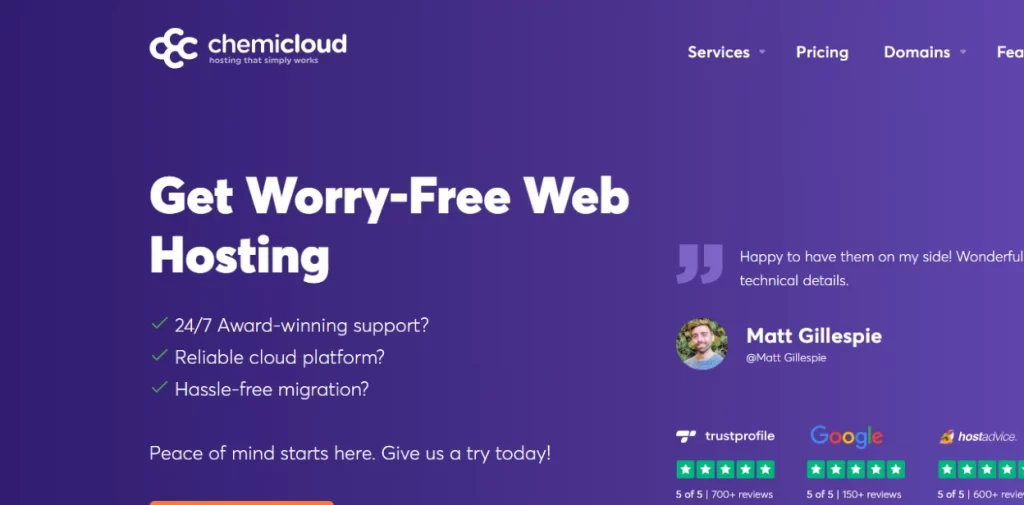
ChemiCloud is one of the better traditional hosting options for people who are not ready for a VPS but still want a more reliable experience than the typical bargain hosts.
It sits in a useful middle ground. It is more approachable than a performance VPS, but it also tends to offer a more dependable experience than hosts that rely heavily on introductory pricing and volume-based marketing.
Best for: smaller business sites, simpler WordPress builds, and users who want a more trustworthy shared hosting style experience.
- Good entry-level option for smaller sites
- Better-than-average shared hosting fit
- Useful for people who want something straightforward
- Can work well before moving up to a higher-performance setup
Why I recommend it:
ChemiCloud is a reasonable choice when you want shared hosting, but you want to avoid the worst parts of the mainstream budget market.
5. Cloudways

Cloudways became popular by offering a more accessible bridge between shared hosting and cloud infrastructure. For many users, that has made it an easy first upgrade path.
Its main appeal is convenience. You get access to cloud-based infrastructure without needing to manage everything manually. That convenience is valuable, but it also means you are paying for the layer Cloudways adds on top.
Best for: users moving up from shared hosting who want a more guided cloud-style setup without going fully custom.
- Easy upgrade path from shared hosting
- More flexibility than traditional budget hosts
- Useful stepping stone for growing sites
- Cloud-based positioning is appealing for many users
Why I recommend it:
Cloudways still makes sense for users who want something more scalable than shared hosting, but do not want to manage their own full server environment.
6. RunCloud

RunCloud is a better fit for developers, agencies, and technical users who want more control over their hosting stack without doing everything from scratch.
It is not hosting in the same packaged sense as the other options. It is more of a platform layer for managing cloud servers cleanly. That means the value here depends on your comfort level and your workflow.
Best for: developers, technical teams, and agencies that want control, flexibility, and a cleaner way to manage cloud infrastructure.
- More control than traditional managed hosting
- Strong fit for technical teams
- Useful when you want to shape your own infrastructure decisions
- Can be very powerful in the right hands
Why I recommend it:
RunCloud is one of the better choices for people who want hosting control without going fully raw or manually configuring every layer themselves.
Hosting Comparison Table
| Host | Performance | Scalability | Support | Best For |
|---|---|---|---|---|
| Yogi’s VPS | ★★★★★ | ★★★★★ | ★★★★★ | High traffic + WooCommerce |
| ScalaHosting | ★★★★☆ | ★★★★☆ | ★★★☆☆ | Budget VPS |
| MechanicWeb | ★★★★★ | ★★★★☆ | ★★★☆☆ | Performance users |
| ChemiCloud | ★★★☆☆ | ★★☆☆☆ | ★★★★☆ | Small sites |
| Cloudways | ★★★★☆ | ★★★★☆ | ★★★☆☆ | Mid-tier users |
| RunCloud | ★★★★★ | ★★★★★ | ★★☆☆☆ | Developers |
Not sure which hosting is right for your setup? Get a free WordPress audit →
Final Verdict
If performance, SEO, and scalability matter, your hosting needs to go beyond a cheap starter plan.
The best option for serious WordPress users is the one that gives you strong infrastructure, enough room to grow, and real support when performance or technical issues start affecting the business.
Yogi’s VPS is the strongest overall choice in this lineup for site owners who want speed, stability, Core Web Vitals support, and ongoing technical help in one place.
If you're still comparing hosting options, start with a real audit before making a move. Request your free audit here →
Get a Free WordPress Performance Audit
Find out exactly what’s slowing your site down, where your hosting may be holding you back, and what to improve next.