How We Helped GetGeoFencing Push Core Web Vitals Into the Green
GetGeoFencing needed more than a simple speed plugin setup. The site had strong business intent, but performance issues were holding back the mobile experience, Core Web Vitals visibility, and search growth potential.
Performance Results
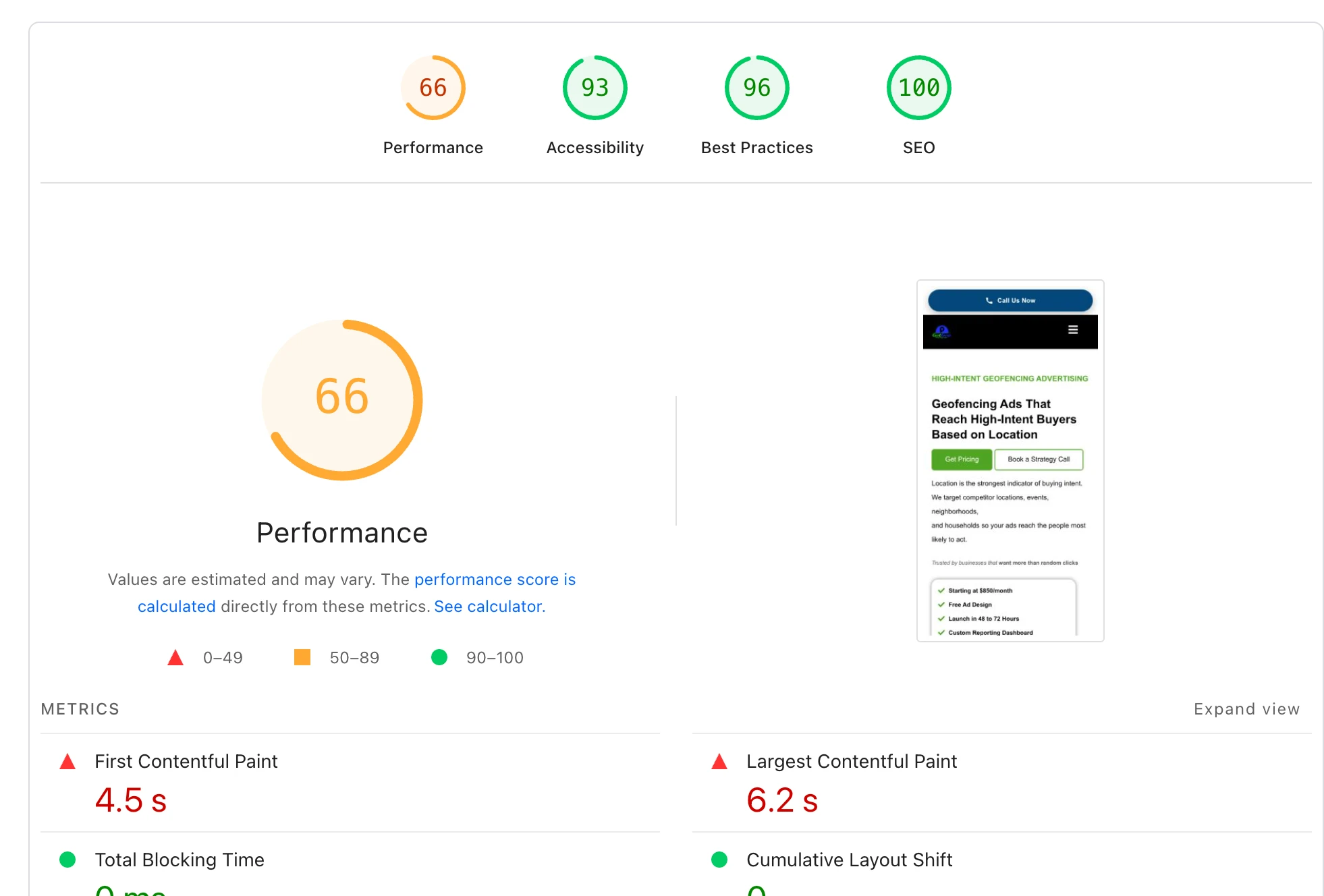
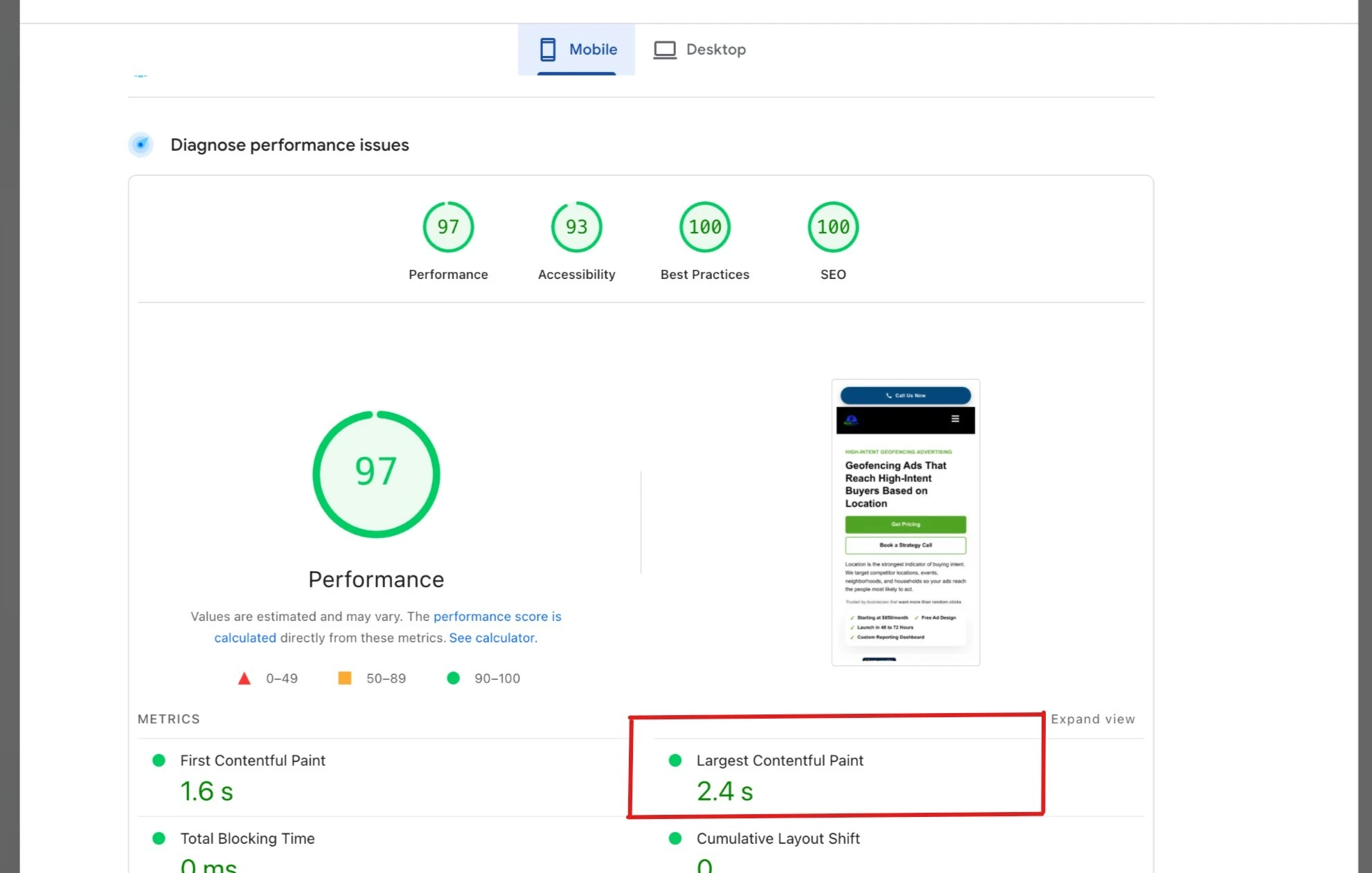
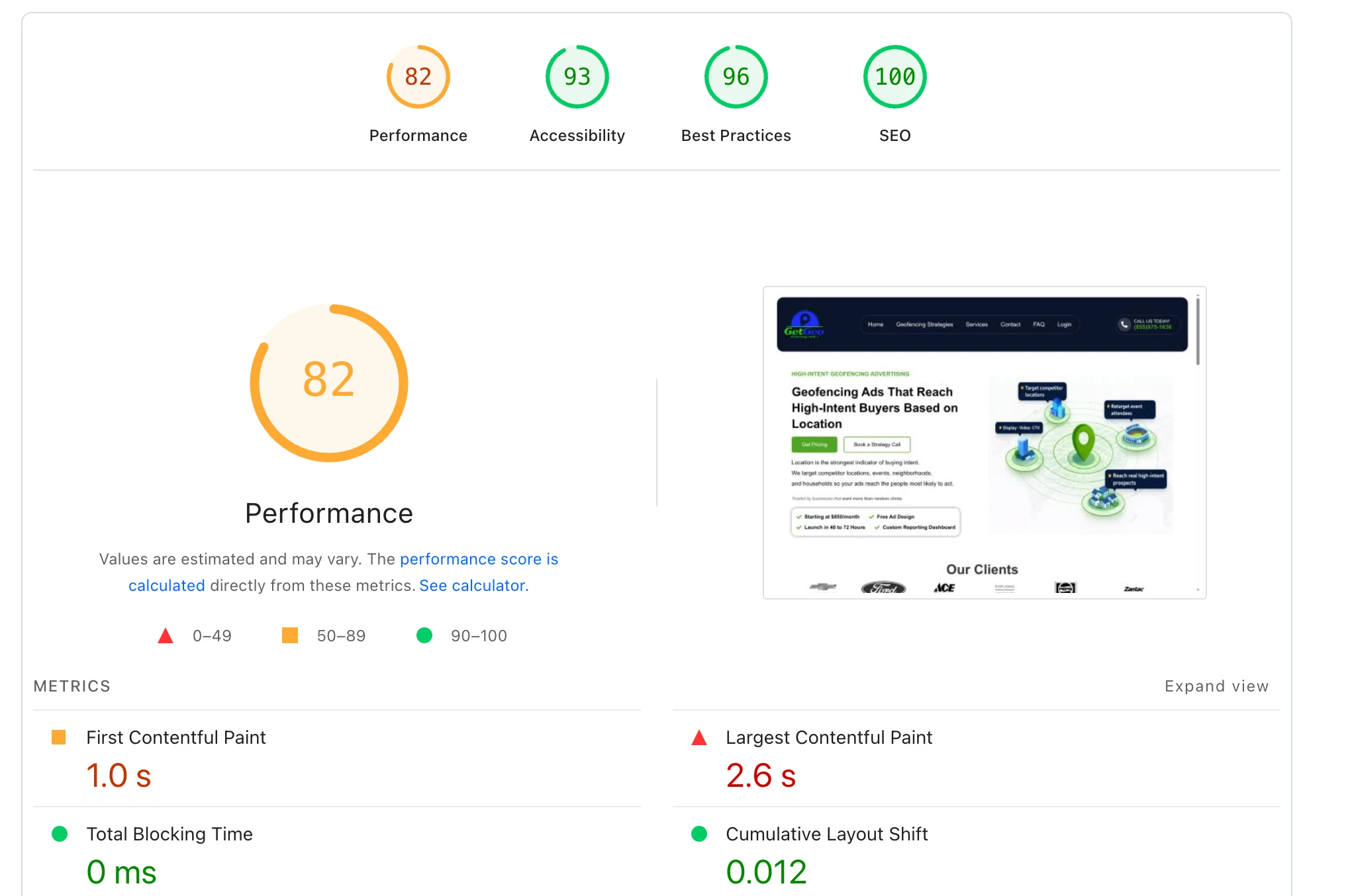
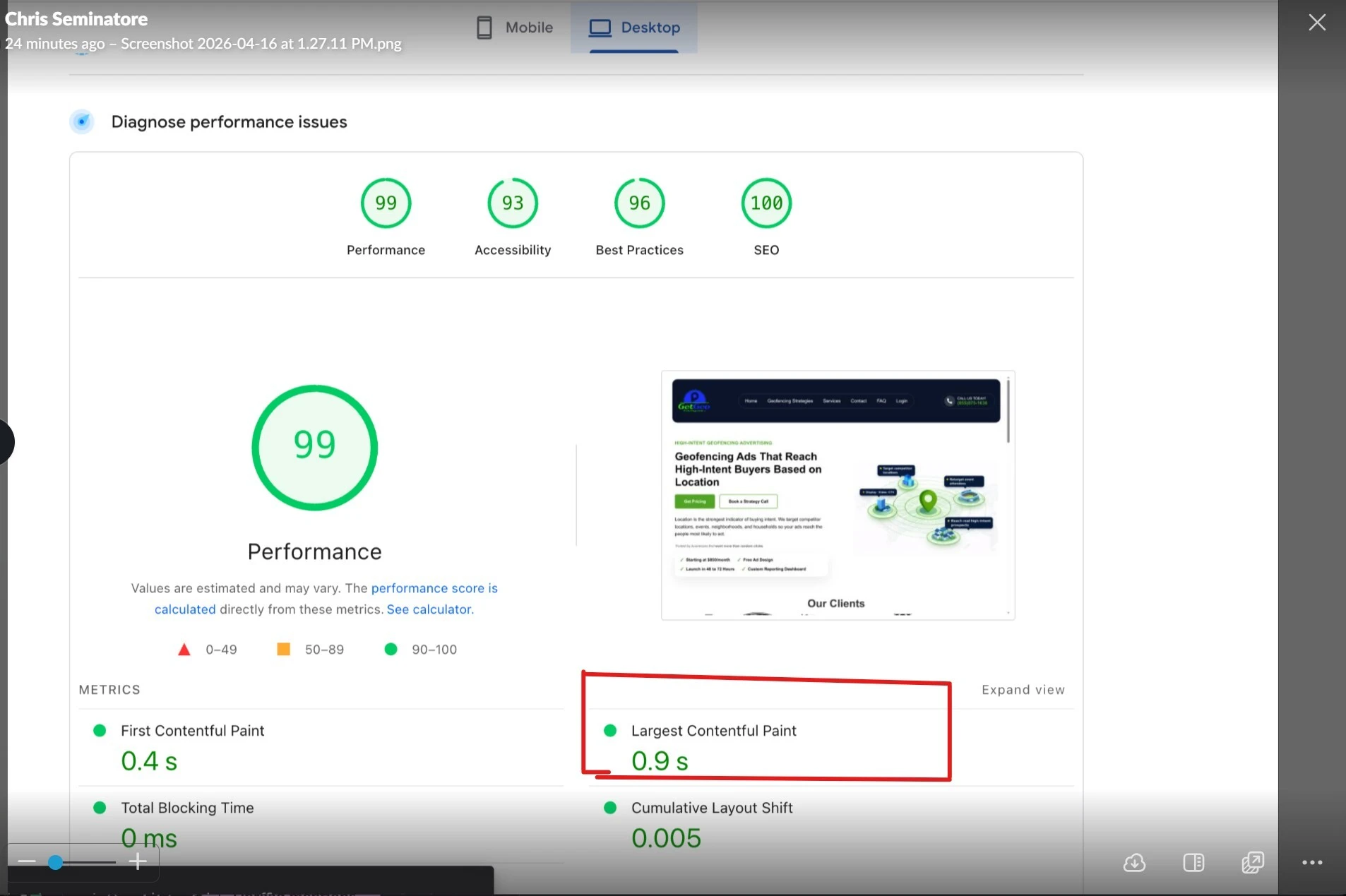
The biggest win was reducing the mobile performance gap. The site moved from inconsistent orange scores into a much stronger green performance range across mobile and desktop tests.
Mobile Performance
Desktop Performance
Core Web Vitals Improvements
Mobile LCP
Desktop LCP
Before and After
What We Optimized
Render Path Cleanup
We reduced the impact of render-blocking CSS, plugin assets, Elementor styles, theme files, and unnecessary front-end loading.
Media and Image Delivery
We focused on the heaviest page assets, improved image handling, and reduced unnecessary payload weight above the fold.
Core Web Vitals Stability
We protected layout stability, monitored LCP, kept CLS low, and avoided major structural changes while Google collected real user data.
Cache and CDN Consistency
We maintained stable caching behavior so users and Google received consistent performance signals instead of mixed results.
Core Web Vitals Acceleration Plan
There is no direct button to force Core Web Vitals reporting inside Google Search Console. The strategy is to create the right conditions for Google to collect, process, and classify stable real user data.
Route paid traffic into 1 to 2 stable landing pages instead of splitting visits across multiple similar URLs.
Avoid layout changes, major script changes, redesigns, and unnecessary cache changes during the data window.
Prioritize mobile experience because mobile field data is critical for Core Web Vitals reporting.
Keep caching, CDN behavior, and deployment practices consistent so real users experience stable speeds.
Google needs time to collect and reclassify field data. Early signals can appear in about 2 weeks, while full reporting often takes 3 to 5 weeks.
Re-check mobile layout, images, fonts, JavaScript impact, and key landing pages before scaling traffic.
Want Results Like This?
Yogi’s VPS combines managed WordPress hosting, performance optimization, technical SEO support, uptime monitoring, backups, and hands-on development support for businesses that need their website to move faster.