How Slow Hosting Kills Your Google Rankings
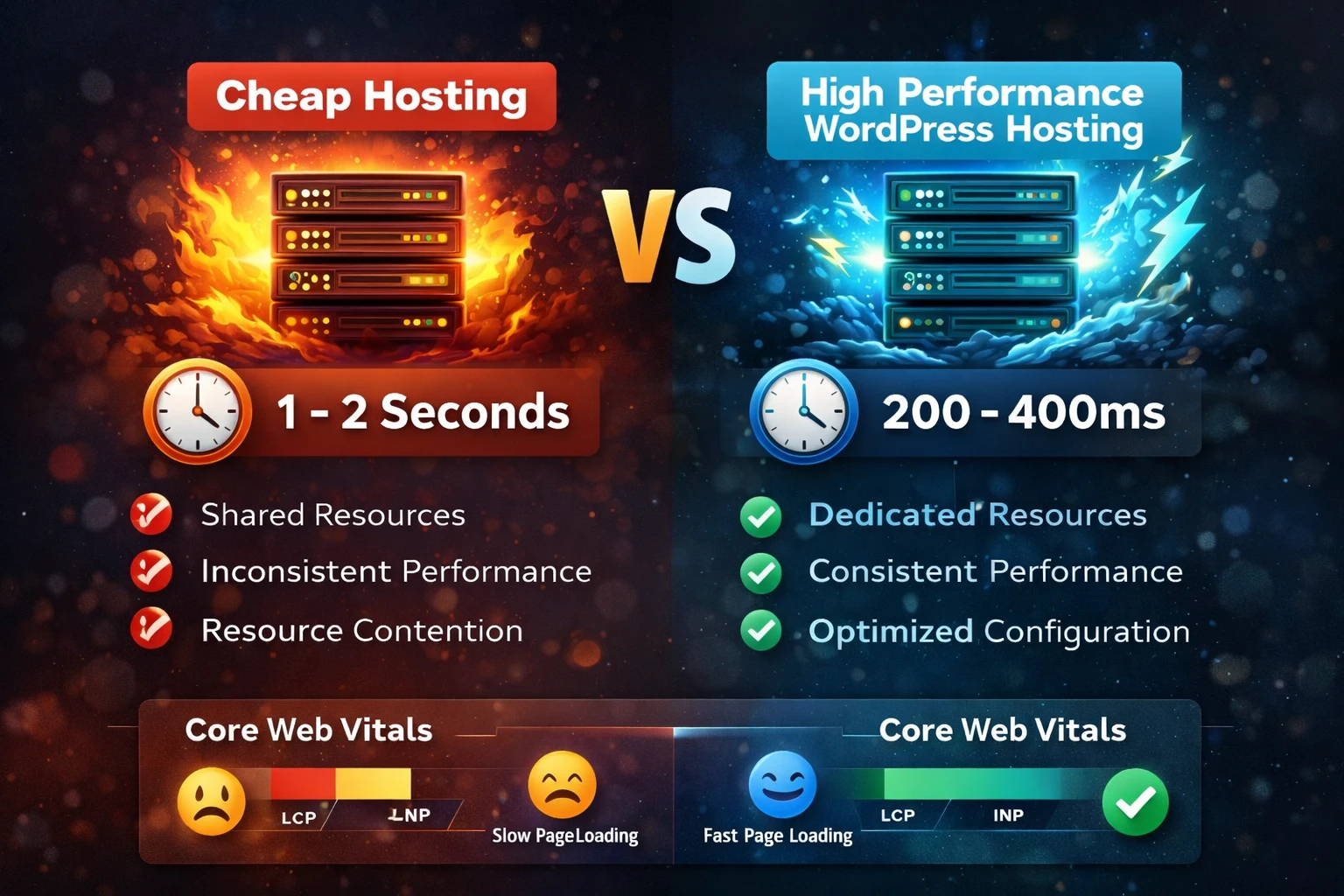
Why your server speed directly impacts search visibility, traffic, and revenue.
Most business owners focus on design, content, and keywords when trying to improve SEO.
But there is a foundational issue that gets overlooked far too often.
Your hosting.
If your hosting environment is slow, unstable, or overloaded, your rankings will suffer no matter how strong your content strategy is.
In fact, many performance issues can be traced back to cheap hosting environments that limit your site’s ability to perform.
Google Measures Real-World Performance
Google does not just evaluate your content. It evaluates how your website performs for real users.
This is where Core Web Vitals come into play.
LCP
Largest Contentful Paint
How quickly your main content loads.
INP
Interaction to Next Paint
How responsive your site feels when users interact.
CLS
Cumulative Layout Shift
How stable your layout is while loading.
These metrics are heavily influenced by your hosting environment. If your scores are low, you will need to improve your Core Web Vitals and address the root performance issues.
The Hidden Bottleneck: Server Response Time
Before your website can load anything, your server has to respond.
This is known as Time To First Byte (TTFB), and it is one of the most important performance factors in SEO.
Ranking Drop vs Load Time
As load time increases, search visibility and user engagement decline.
If your server is slow, everything else is delayed.
If your server takes 1.5 seconds to respond, your site cannot load faster than 1.5 seconds no matter how optimized your frontend is.
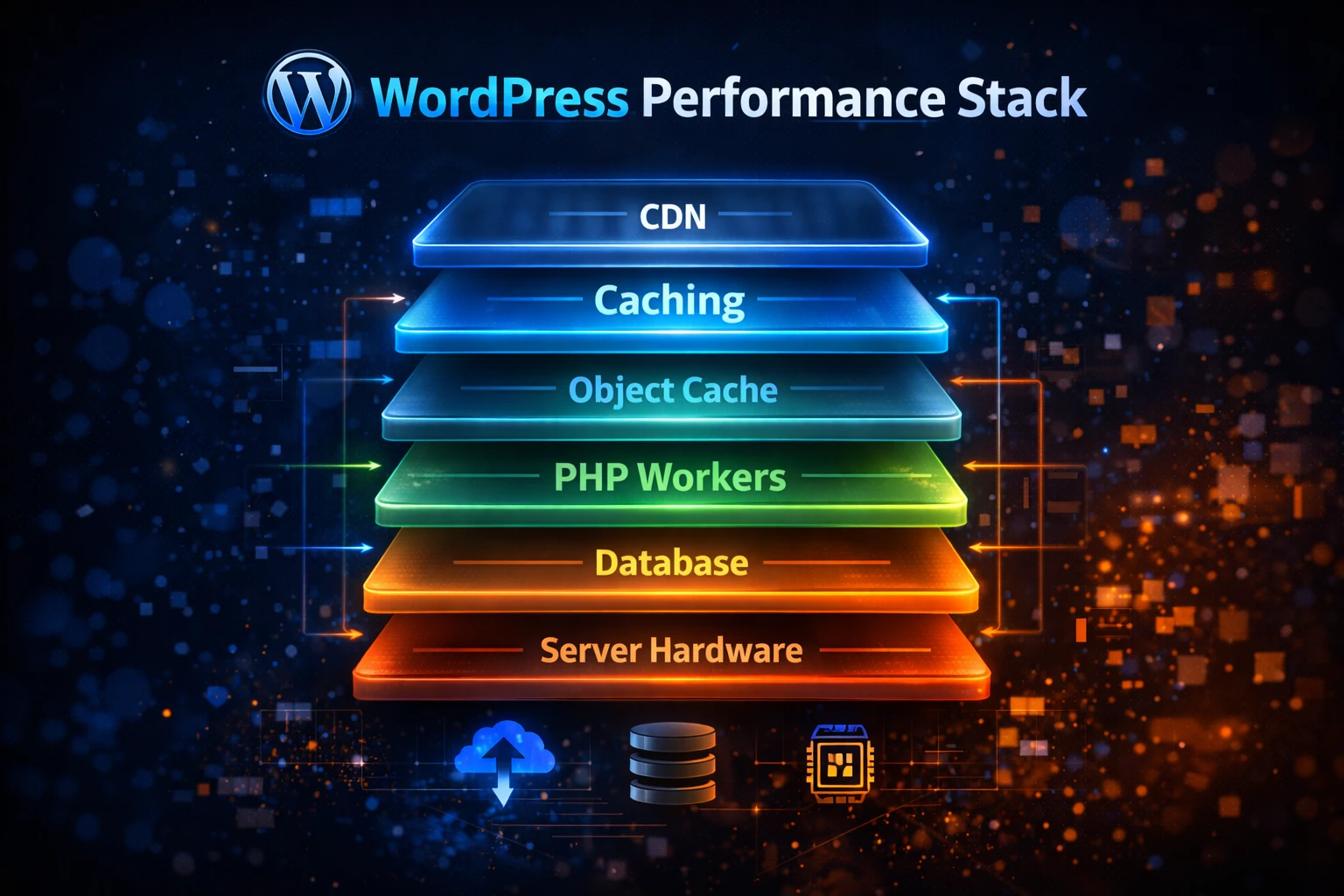
What Causes Slow Hosting?
Overloaded Servers
Your site shares resources with too many other websites.
No Object Caching
Database queries are processed repeatedly instead of being cached.
Poor Infrastructure
Outdated hardware and slow storage reduce performance.
Lack of Optimization
No tuning for WordPress-specific performance.
How Slow Hosting Hurts Rankings
Higher Bounce Rates
Users leave before your page loads.
Lower Engagement
Slower sites reduce time on page and interactions.
Poor Crawl Efficiency
Google crawls fewer pages when your site is slow.
Lost Rankings
Faster competitors outperform you in search results.
A full WordPress performance audit can help identify whether your hosting is the root cause.
Speed Alone Is Not Enough
Improving speed is critical, but it is only part of the equation.
Your website also needs:
- Strong conversion structure
- Clear messaging and calls to action
- Content strategy for growth
- SEO execution
But none of that works properly without a strong foundation.
The Fix: Better Hosting and Optimization
The fastest way to improve performance and unlock growth potential is upgrading your hosting environment and optimizing your stack.
Many businesses see major improvements after migrating from shared hosting to a VPS or comparing solutions like managed WordPress hosting vs AWS.
What That Looks Like
- High-performance VPS or managed environment
- Full-page caching and object caching
- Optimized PHP and database configuration
- CDN and edge delivery
- Consistent, predictable performance
Not sure if your hosting is holding you back?
Get a free WordPress performance audit and see exactly what is limiting your rankings.
Final Thoughts
If your website is slow, your SEO will struggle.
Not because your content is weak, but because your foundation is limiting your growth.
Long-term success comes from understanding how WordPress speed drives SEO growth and building on the right infrastructure.
Speed is not just a technical issue. It is a growth issue.
Get a Free Website Audit
We will identify what is slowing down your site and show you exactly what to fix.
Request Your Free Audit