Why High Performance Websites Drive SEO Growth
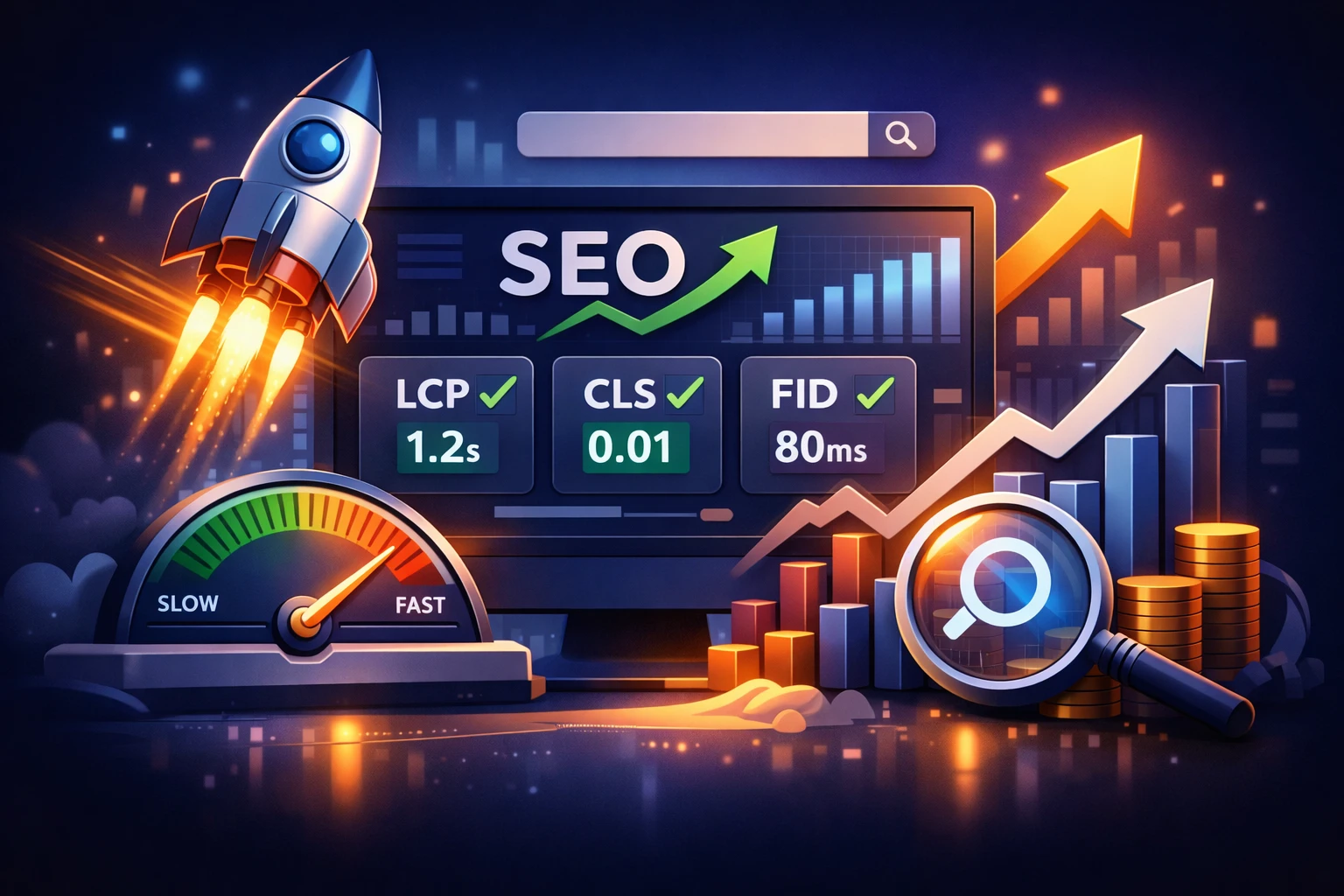
Search engines want to deliver fast, reliable results to users. When your website loads quickly, stays stable, and responds instantly to visitors, search engines view it as a higher quality destination. A slow or unstable site sends the opposite signal.
For growing brands, website performance is not just a technical issue. It is directly connected to rankings, traffic growth, and conversion rates.
That is why issues like slow hosting, weak caching, and poor Core Web Vitals can hold back even well-written content.
Speed is a ranking signal
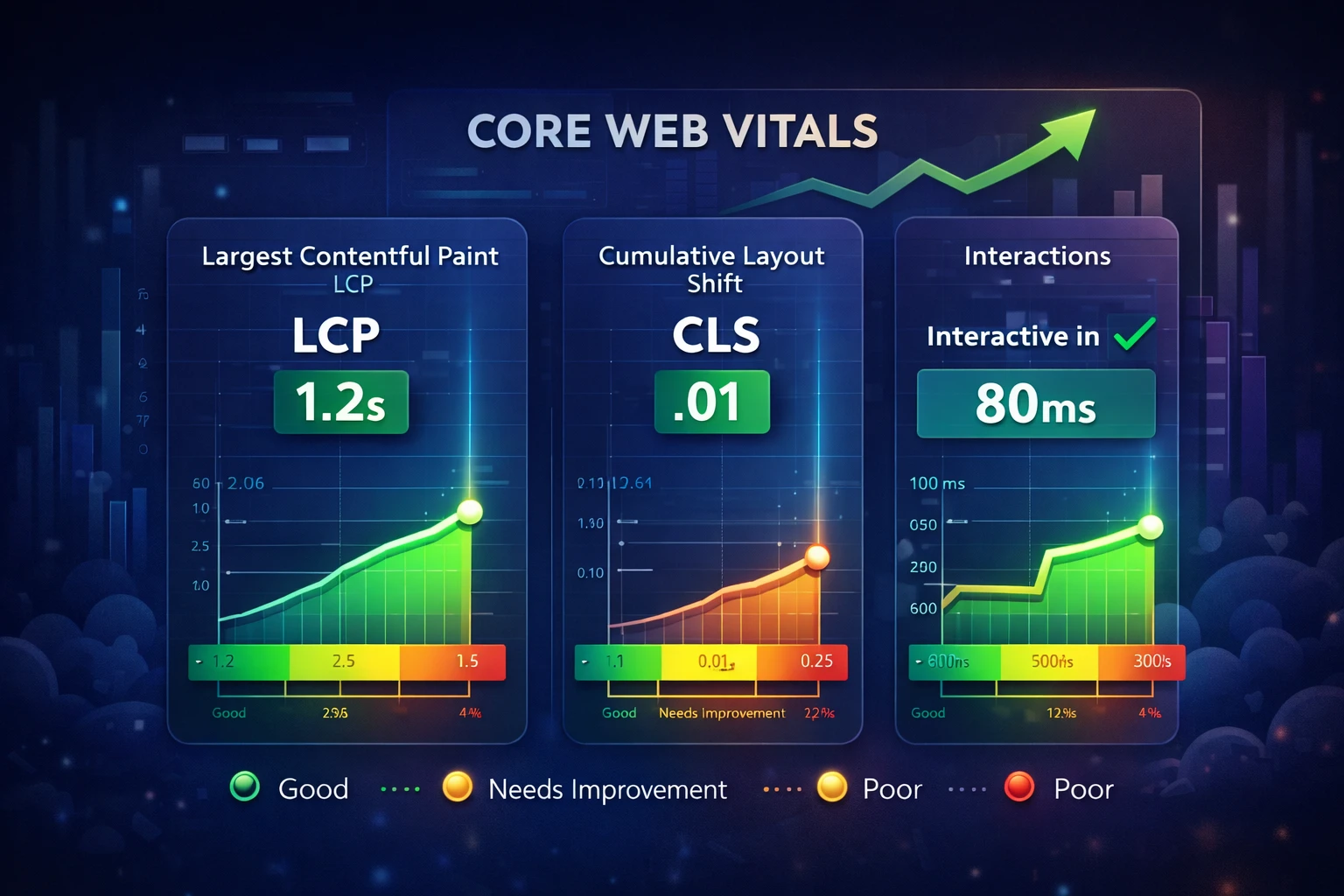
Google measures the performance of real user experiences using metrics like Core Web Vitals. These signals help determine whether a page provides a smooth and reliable experience for visitors.
If your site is struggling here, start by learning how to improve Core Web Vitals and review your full stack with a WordPress performance audit.
Metrics that influence rankings
- Largest Contentful Paint which measures how quickly main content loads.
- Cumulative Layout Shift which measures visual stability.
- Interaction responsiveness when users click or scroll.
- Server response time and page rendering speed.
What slow sites experience
- Lower search visibility.
- Higher bounce rates from frustrated users.
- Reduced crawl efficiency for search engines.
- Lower conversion rates.
Performance affects how Google crawls your site
Search engines allocate a crawl budget to every website. If your server responds slowly or struggles during traffic spikes, search engines will crawl fewer pages. This limits how quickly new content gets indexed.
This is one reason cheap WordPress hosting can quietly damage long-term SEO growth. Weak infrastructure limits how efficiently your site can be crawled and indexed.
Healthy websites allow
- Faster crawling and indexing.
- More frequent content discovery.
- Better performance during traffic spikes.
Poor performance causes
- Search bots abandoning slow pages.
- Incomplete indexing of large sites.
- Ranking volatility during server slowdowns.
User experience and SEO work together
Search engines evaluate how users interact with your site. When pages load instantly and navigation feels smooth, visitors stay longer and explore more pages.
Performance improvements do not just help rankings. They also create stronger engagement signals that support better conversion outcomes.
Benefits of a fast site
- Lower bounce rates.
- Higher engagement time.
- More pages viewed per visit.
- Better trust from users.
Benefits for your business
- Higher conversion rates.
- More qualified organic traffic.
- Improved brand credibility.
- Better performance during campaigns.
What makes a WordPress site truly high performance
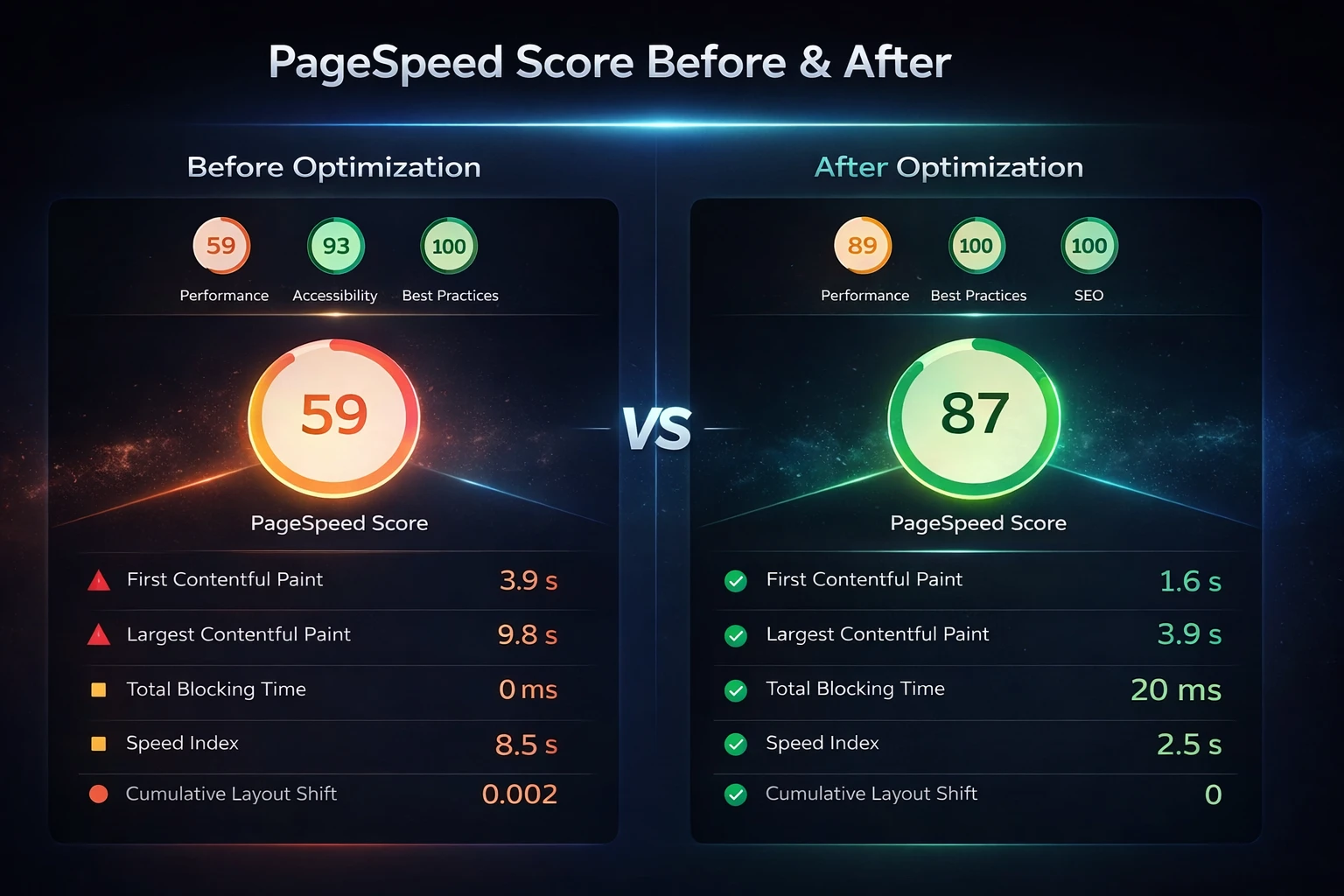
Speed is not just about one plugin or one setting. It comes from the entire infrastructure working together.
That includes hosting, caching, database efficiency, media delivery, and script management. If one of these layers is weak, the whole site feels it.
Technical foundations
- Optimized hosting infrastructure.
- Efficient caching layers.
- Database optimization.
- Content delivery networks.
Application level improvements
- Lightweight themes and plugins.
- Optimized media delivery.
- Clean code and minimized scripts.
- Monitoring and performance tuning.
To go deeper, review our guide on choosing the right caching setup and see how infrastructure decisions compare in managed WordPress hosting vs AWS.
The long term SEO advantage
High performance websites build a foundation for sustainable growth. When your infrastructure is fast, stable, and healthy, every piece of content you publish has a stronger chance to rank.
For businesses focused on SEO growth, investing in performance is one of the most reliable long-term strategies.
If you are not sure what is slowing your site down, start with a free WordPress audit and identify the biggest performance bottlenecks first.